Monday, November 29, 2010

December/January Project


Hello class,

Believe it or not, we're beyond half way through the semester! We've covered a lot; I've thrown a lot at you all and some of you have really progressed and shown applied knowledge.

Artists must be free - and not restricted with their craft (BUT NOT "FREE" with their class behavior). I don't believe in censoring your imaginations. It's important to me to attempt to stimulate it.

We've been mainly observing significant manga, anime and graphic novels such as Barefoot Gen, Princess Mononoke, Persepolis, etc. In spare time, people have been reading on their own "Shonen Manga", which is Manga marketed towards young male adults between the ages of 10-18. While this is fine, in today's class I will attempt to once again expand the boundries of what anime can be; we'll be watching "Spirited Away" which is a fantasy anime for audiences for children between the ages of 7 and 77.

BUT: I am expecting a lot from all of you in the next two months. And I have a written assignment of what I am expecting.

In groups of 2 or more, I am expecting to see:

* 10-15 pages of manga that demonstrates an understanding of figurative, iconic, abstract and perspective drawing.
* A written script constructed before the manga itself
* 2-3 character studies IN FULL color with background and "STATS" (AKA - name, hometown, fears, age, height, weight and a brief discription of who the character is). The character must be
* Documentation of the process (MORE IMPORTANT THAN THE PRODUCT FOR ACADEMIC REASONS! SEE THE ABOVE IMAGES FOR INFLUENCE)

The manga can be longer than 15 pages. I am asking you to work in groups because you will learn from one another.

This is a group project that have formed organically in the class. If you are not a part of a group, JOIN ONE. If nobody wants you in their group, ... consider why and don't victimized yourself as "unpopular". You are all creative. You all have voices. You can all contribute.


Individually, I am expecting:

* A 4-6 page paper (double spaced) reviewing and CRITICING a manga novel of your choice. Please bring in the manga of your choice for me to see prior to writing. Go to libraries to check out a manga. Please notify me if you have difficulties getting your hands on a manga. Please critic on the art AND writing of the manga.

Some suggestions:
* Barefoot Gen
* The Works of Osamu Tezuka
* Deathnote

Graphic Novels are also in this list (american comic books or Manga)
Some Suggestions:

* Maus
* Persepolis
* Blankets
* Palestine
* Epileptic


These two assignments will be due at the end of January. I will not tolerate a mentality of "I'm Done" - meaning the more art you have, the better your grade is. The above is simply the MINIMUM. REMEMBER what Michelangelo says: "In order to be a great artist, you must DRAW DRAW DRAW".

If the above assignments are not completed, you will receive an incomplete, which is the equivalent of an F. But more importantly, you will not be included in our classes final and official "Edwards Middle School Manga" Volume 1.

Please ask if you have any questions. You can also contact me at mr.jackwhturnbull@gmail.com

Monday, November 22, 2010

BRAIN STORMING


Hey guys,

It's a short week if I'm not mistaken. Last Wednesday was great; people were engaged and focusing on making their work spectacular.

In the world of manga, working for 1 hour is a blink of an eye. The greatest mangas take years to construct. With anime (cartoons), people work in teams. Most manga artists have assistants too.

This said, there was a burst of creative energy on Wednesday and I am impressed with what was accomplished with a short amount of time.

Lots of ideas were thrown around. Now it is time for me in a blog entry to critic work and give you all back helpful comments.

PERSPECTIVE

Jogey took a shot at perspective drawing and got a lot accomplished. However, I am going to demonstrate how the "horizon point" in perspective can create an illusion of reality.


The blue lines represent perspective lines being used correctly. The read line we produced without a ruler and thus curves. Make the line straight and the fence polls should increase in size as you get further away from the horizon point. An illustrated example below ...


The green line is a correct use of perspective; using lines to make the illusion of three dimensions upon a 2 dimensional surface. Lemmie know if you have questions, Jogey.

TONE and Texture


Tone, greyscale and texture are other techniques that can be used to create the illusion of depth upon a 2 dimensional surface. DuJuan and Lyndell have both shown us this.

By making the logs of his fire darker, they appear closer or more individual. The fire is also another tone from the background, giving them an identity.

Lyndell uses ICONIC drawing to show a lot of bricks. If one were to attempt to draw bricks realistically, you'd spend hours trying to get them right. Lyndell just quickly draws a brick pattern and this translates.


AESTHETICS

from Wikipedia:

Aesthetics (also spelled æsthetics or esthetics) is a branch of philosophy dealing with the nature of beauty, art, and taste, and with the creation and appreciation of beauty.[1] It is more scientifically defined as the study of sensory or sensori-emotional values, sometimes called judgments of sentiment and taste.[2] More broadly, scholars in the field define aesthetics as "critical reflection on art, culture and nature."[3][4] Aesthetics is related to axiology, a branch of philosophy, and is closely associated with the philosophy of art.[5] Aesthetics studies new ways of seeing and of perceiving the world.[6]


That definition is a mouthful. If you're missing something about all that, don't worry about it. For this class, aesthetics basically means using fashion, props, color, etc. to narrate a character. Both Esdras and Alexis have done just this; Notice the bombs, daggers, walkie talkies and face paint that Esdras has placed on his black ops character. We know a lot about this guy just by what he is carrying. Even his facial expression which is cool and collected. And then the colors are great too. Alexis does the same thing. The spikes, the one eye. We know stuff about these character by what they have on.


I follow a coupla fashion blogs and there is truth in what you can tell from a person by how they look. This people don't have bombs on them, but the lengths of their clothing and they way they do their hair, etc. can showcase something about them.


By the colors alone you know what Superman is all about; he wears red and blue (arguably American colors) and a golden S on his chest. The tone of his muscles also illustrates that the guy works out and shouldn't be messed around with.

STRUCTURE, THE GRID and MAKING A PRODUCT

Mostly everyone did great in class, but I wanted to focus on Erik, Kevin and DeShaun's work and Ronnie, Alexis, DuJuan and Denisse's groups. Nygell and Mei LI also worked great together. Also, Jose and Lyndell can fall into this catagory.

These people are IMAGINING THE NEXT STEP; storytelling. Making a manga. They're finding creative ways to push a story further and go beyond an illustration of perspective and or a character.

Observe:


The paper we are working on is NEWSPAPER layout paper; it is the paper people worked on for newspapers before computers took over. It is lined and numbered by measurement. One group WROTE OUT each panel of a story prior to illustrating it.

What is the benefit of this?

This allows the story to be EDITED before going to drawing. It's frustrating to draw an entire panel and then say ... "wait a minute ... this isn't how I want the story to go."

For a group project, certain students can be asked to draw certain panels.

This is a great approach and I encourage it.

Jose and Lyndell are also doing a similar idea sharing writing and drawing responsibilities.


Danilo and DuShaun are natural born drawers. They both have a intuitive sense of the figure, background, etc. They're also prone to drawing battles scenes. This is great. However, to make a manga, a sense of story needs to be developed. This separates comics, manga, graphic novels, whatever you want to call it, from illustration.

A story has a beginning, middle and end. These two above pages are a part of the story - but it is unclear where it starts, whats in the middle and what is the end result.

So to go further, look at your drawers and just ASK a lot of questions and write them down.

Examples:

1. Why is this guy fighting?
2. Who is this guy?
3. Where does he live?
etc., etc., etc.

If you feel uncomfortable writing, maybe team up with someone who likes to write.

OK - enough blogging for now. Let's get to work! Come to me if you have questions. I'll be teaching mini lessons through class.

Wednesday, November 17, 2010

Class drawing challenge


Hello True believers,

I've been observing each and every one of you personally from an educational standpoint. You all have strengths and weakness with your artwork and your ability to focus and determination.

I'm asking a lot in this class. I'm holding people to high standards and being a hard critic, mainly because I believe in sincerity - it's a dis-service to tell you something is intriguing or powerful when it isn't. Again, effort translates in art.

I've been teaching you a lot and now I want to let you know I mean what I say and I imply the techniques taught in class.

Today's assignment we'll be observing my work and doing exercises based on how I've constructed 3 pages.

Above are selected panels from pages I've been working on.

NOTICE:

1. THESE ARE DONE IN PENCIL. This is because pencil allows me to EDIT with eraser. I get ideas down FAST and SLOPPY. I work both figuratively and with icons.


CLASS DISCUSSION:

Notice the above panel.

1. How is the telephone poll in the background drawn? Describe how it is drawn.

2. Observe all the gray in the panel. Where is there gray? What "tool" made the gray.


Look at this action panel. Comment on the line work. Describe the lines. Count how many lines are in the drawing. How does this penciled panel differ from your average INKED manga panel? Of the 3 types of drawing, what would you call the action lines?

I use an "emotional face" guide when I work (the faces I gave you in class). My characters have conflicting emotions and personalities. I attempt to blend emotions by using the guide. Their expressions are "ICONIC" and their figures are ... figurative.


Lastly, this page is done "BACKWARDS". The imagery and inspiration has come for the later part of the page, BUT NOT THE BEGINNING just yet. If you are stuck on a penel, JUST KEEP GOING.

I say this because Monday in class, to no fault of his own, ERIC sat and thought about a panel for a good solid 20 minutes with putting down marks. If you're stuck on a panel, write down quickly what occurs in the panel and then move on.

Here are what people are good at:

Ronnie: iconic drawing, backgrounds and clear story telling
Lyndell: figurative drawing and clear story telling
Deshaun: text and background and clear storytelling
Danilo: abstract fighting scenes and clear storytelling
Kevin: architectural monsters
Dujuan: Tone and greyscale/balancing black and white for contrast (more on this in a future class)
Denisse: Storyboarding and "the mundane"
Jose: costume design and concept
Sigi: sequence and abstract art
Nygel: Writing (when he's focusing), promotion and talking
Eric: figurative drawing
Alexis: detail - observational drawing (drawing from life, observing how drawing is done)
Mei Li: color
Matthew: Figurative Drawing and architectural drawing (buildings)

These people have been consistently creating work. If you're not on this list, don't take it personally, it's not that I don't like you, but you need to be producing more in class for me to OBSERVE. I can't help you if nothing exists.

ASSIGNMENT:

I'm challenging a drawing battle with you all. Consider me like ... Ken from the Fist of the North Star or something. Drawing and art is a SPORT (people forget this) its objective is just abstract.

I've made 2 pages and a 3 panel action panel.

In groups of 5 you must produce 3 pages. I may be older than you all, but there is only 1 of me. There are 5 of you. You will be given manga bristol board and I challengle you all to attempt to make something more AWESOME than these pencils drawings.

At the end of class we will critic and decide who made the sweetest 3 pages.

Writing:

What makes a story interesting?

Suspense?
Emotion?
Moral Dilemmas?

What is the moral dilemma in my comic?

Drawing:

Think about DIFFERENT TYPES OF DRAWING. ABSTRACT DRAWING, FIGURATIVE DRAWING AND ICONIC DRAWING. Try to utilize what you've learned in class.

Monday, November 15, 2010

MISSION IMPOSSIBLE/INCREDIBLE

Last Wednesday we ran two manga themed drawing exercises; collaborative drawing exercises. As a result, we developed some characters, but also made some GREAT art! The above drawing is a GREAT example. NOW - to piggy back on what we've been talking about in class, I'll offer CONSTRUCTIVE CRITICISM and describe WHY I love the above drawing.

1. MARKMAKING:

A variety of materials are used in order to showcase a variety of lines. Pencil AND magic marker are used.

2. FORCE:

Notice how hard the artist is bearing down with the marker. The marker is used so hard it bleeds the hair, thus creating a BLEND.

3. ICONIC Drawing:

A dot for an eye, little nibs for hair, and what looks like soccer cleats by making "M" lines. Great stuff.

4. ABSTRACT DRAWING:

The bottom of the page is simply scribbles. But it's pretty to look at and simulates ... an explosion? lava? Who cares? It's fun to look at.

Clearly Danilo and Sigi are having fun with this drawing. THIS IS WHAT I'M LOOKING FOR. ENERGY!!!! It translates and it translates to an audience. People pick up on this stuff and it makes them happy.

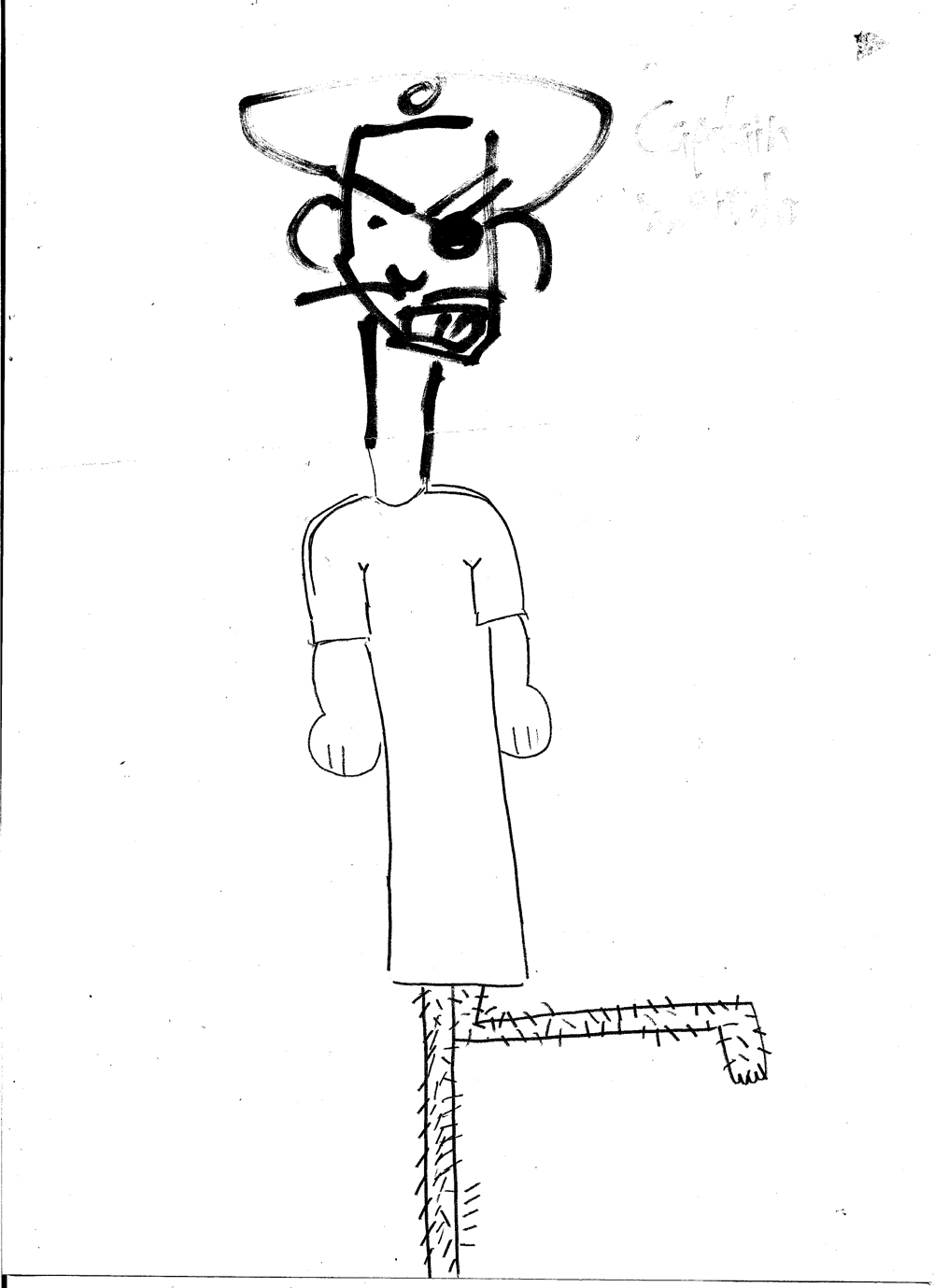
Let's look at some of the CHARACTERS we created in last week's class.


There is:

* BOB
* Mrs. Wiggles
* Captain Weirdo
* Sgt. Stinkyfat
* Angry Woman/Duck
* A guy who was named something offensive to people with learning disabilities. His name will be changed to Hobo Jones.
* Coupla monsters

In class today, if you are working on a long term project, you're FOCUSED, you're not messing around, please continue. I will come around and give you pointers and/or exercises to help you with your drawing and/or writing. If you need an assignment, here are some!

SO: Pop Quiz hot shots:

1. Do a free write describing the characteristics and lifestyle of one of the created characters. There are 6 characters. Choose among yourselves who will write who. Otherwise, I'll assign it.

2. Remember our mundane/sublime writing exercise? Take a character. On one page have something MUNDANE occuring. Then on a second page, have something SUBLIME occur to the character.

----> Today I'll be bring in a TON of photocopied pages from manga/comic books/graphic novels. Take a page you like, do an artist copy. It can be quick. THEN: Write Construct Criticism as to WHY you like the page. Write as much or as little as you want. You'll be graded by the CONTENT and INTELLIGENCE of your critique.

At 3:40, we will be CONVERGING and sharing what we've done in this class. If you're disturbing this meeting, you'll be thrown out of class and will not be asked to return. We're putting the peddle to the metal now because half the class is energized and we need to make an awesome PRODUCT by the end of the semester. I'm talking an actual comic book by using this publisher.

I'm going to be paying for this with MY MONEY. I've run out of class funding. I'm not going to publish stuff I don't like. If you're not working hard, it will translate and be seen in the art and I don't want you in this comic. I'm no longer your teacher, I'm now your boss.


Wednesday, November 10, 2010

New WEBCOMICS

Ronnie Bicalho


Ronnie uses ICONIC ART in the noses of his characters. Each individual character has an iconic nose. The windows in his school picture are simply squares, but placed correctly on the page makes the illusion of a school. Ronnie's ghosts are also iconic - and hilarious!


Lyndell Harledwar


Lyndell is beginning to TWIST and TURN his figures and emphasize them with abstract lines to add drama and motion to his illustrations. Abstract lines help to add significance to certain images.

The beginning of stories by Lyndell and Ronnie ... here are two students who are employing figurative art, abstract art and iconic art.

Monday, November 8, 2010


Here is a cover page and two pages from DeShawn's on-going series, "Cele E Ti Al Party". Please correct me if this is incorrect. DeShawn has been working very passionately and this is merely a snippet of his creative endeavors.

As teacher, it is my job to improve the work of each and every student. And so, this blog post is about "constructive criticism", or, to put it another way, "how to "THINK CRITICALLY."

Thinking critically about your own work is essential to growth as an artist, writer, ... just about anything. Having the power to look at work and judge it based on what it demonstrates is key. However, people's egos can easily be hurt. And I'm not brash enough to waltz into class and put down everyone's work. And so "CONSTRUCTIVE CRITICISM" is what needs to be learn.

Here is an example of BAD criticism:

"I don't like panel 2 because the guy in it looks stupid."

Here is an example of GOOD criticism:

"I have a hard time reading the manga. Perhaps you should make more space for your text so it is legible."

CLASS QUESTION:

WHAT IS THE DIFFERENCE between good criticism and bad criticism?

I'm putting DeShawn's work up on the blog because he is confident, excited and shows lots of promise. As a result, I wish to give him constructive criticism so he'll get better. Beware those who can't take constructive criticism; they don't grow or improve. At the same time, beware people who have no confidence in their work. If you don't like your work or believe in it, you can't expect anyone else to.

A copy of our latest zine will be passed around. On a piece of paper that will be going around, think of something CONSTRUCTIVE to say to a class peer. You can choose to to write your name or keep your comments anonymous.

Also: Take comments with a grain of salt, meaning, constructive criticism should be taken at face value. As we've examined, there are lots of different types of manga ... and you should stick to your guts!